


Everything You Need to Know About Diamond Cut


What is diamond cut, exactly?
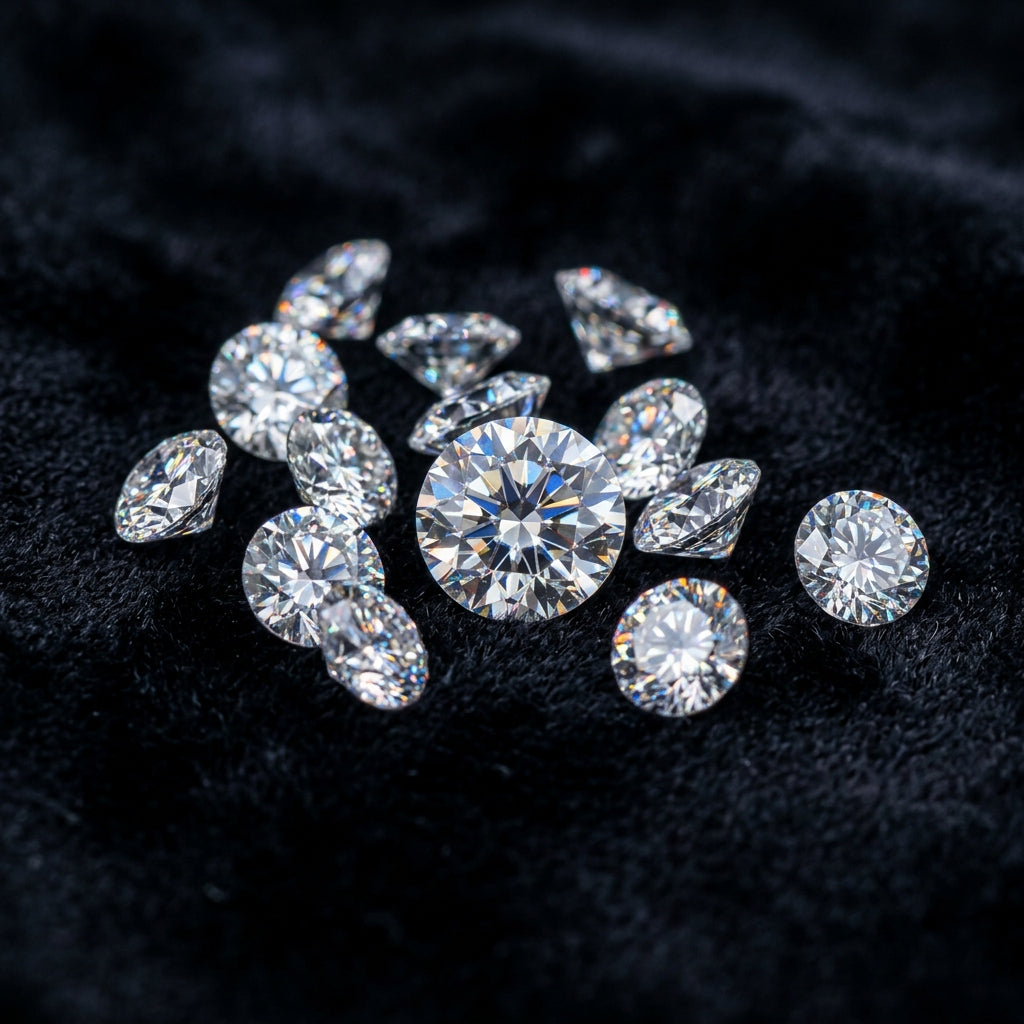
Cut is one of the most important factors influencing a diamond’s appearance, quality, and value. It affects how well the diamond reflects light, how much it sparkles, and even how large it appears. Diamonds with poor cut quality often carry excess weight in their lower portion, making them look smaller than their actual carat weight.
So, what exactly does cut mean? Both natural and lab-grown diamonds begin as rough, unshaped crystals. Skilled craftsmen transform these rough stones by cutting them into specific shapes and carefully polishing their surfaces. The quality of this workmanship determines how effectively the diamond interacts with light. Based on factors such as proportions, symmetry, and polish, a diamond’s cut is graded on a scale ranging from Poor to Excellent.

Excellent-cut diamonds offer exceptional brilliance, fire, and visual appeal, delivering the highest level of sparkle and beauty. Very Good or Great-cut diamonds can provide impressive light performance while often being more budget-friendly. Good-cut diamonds still maintain an attractive appearance, though they may not display the same level of brilliance. Generally, Fair and Poor-cut diamonds are not recommended for engagement rings, as their reduced light performance can make them appear dull and less vibrant.
It’s also important to distinguish between cut and shape, as the two terms are often confused. A diamond’s shape refers to its overall outline or silhouette, such as Round, Oval, or Pear. Cut, on the other hand, relates to the quality of the diamond’s proportions, symmetry, and facet arrangement.
Each diamond shape has an ideal set of proportions that maximize its beauty and light performance. The closer a diamond comes to these ideal standards, the higher its cut grade will be, resulting in greater brilliance, sparkle, and overall visual appeal.
What affects a diamond’s cut grade?
Proportions
A diamond’s proportions refer to the balance between its width, depth, and facet dimensions. To achieve optimal light performance, these measurements must fall within specific ranges. Diamonds with poor proportions may leak light instead of reflecting it, resulting in a dull appearance. Two key measurements used to assess proportions are the table percentage (the size of the top facet relative to the diamond’s width) and the depth percentage.
Symmetry
High-quality diamonds exhibit excellent symmetry, meaning their facets are precisely aligned and evenly shaped. Proper symmetry helps the diamond capture and reflect light more efficiently, enhancing its brilliance and sparkle. Diamonds with poor symmetry often appear less vibrant and may not perform as well visually.
Polish
Polish refers to the smoothness and quality of a diamond’s surface finish after the cutting process is complete. During the final polishing stage, any remaining surface imperfections are minimized or removed. A poorly polished diamond may appear cloudy, hazy, scratched, or milky, reducing its overall beauty and light performance.
Making the cut
| Grade | Description |
|---|---|
| Excellent | Superior brilliance, fire, and scintillation. |
| Very good | Exceptionally bright; visually similar to excellent. |
| Good | Bright, but with slightly less scintillation. |
| Fair | Very little brilliance; avoided for engagement rings. |
| Poor | Poor proportions and near to no sparkle. |
Note: Beluxe only stocks diamonds with cut grade “Good” and above to ensure every stone we sell is full of life.
How do I choose a diamond based on cut?

If you’re looking at Round Brilliant stones, trust the certificate grade. For any other shape, check the symmetry and sparkle using our 3D tool. Stones with a ‘Very Good’ cut grade offer tremendous brilliance while giving you massive savings.
Conclusion
Cut can make or break the beauty of your diamond. The better the cut, the more brilliance, fire, and sparkle you’ll enjoy. Choosing a high cut-grade will translate into a gorgeous diamond with long-lasting good looks.


