
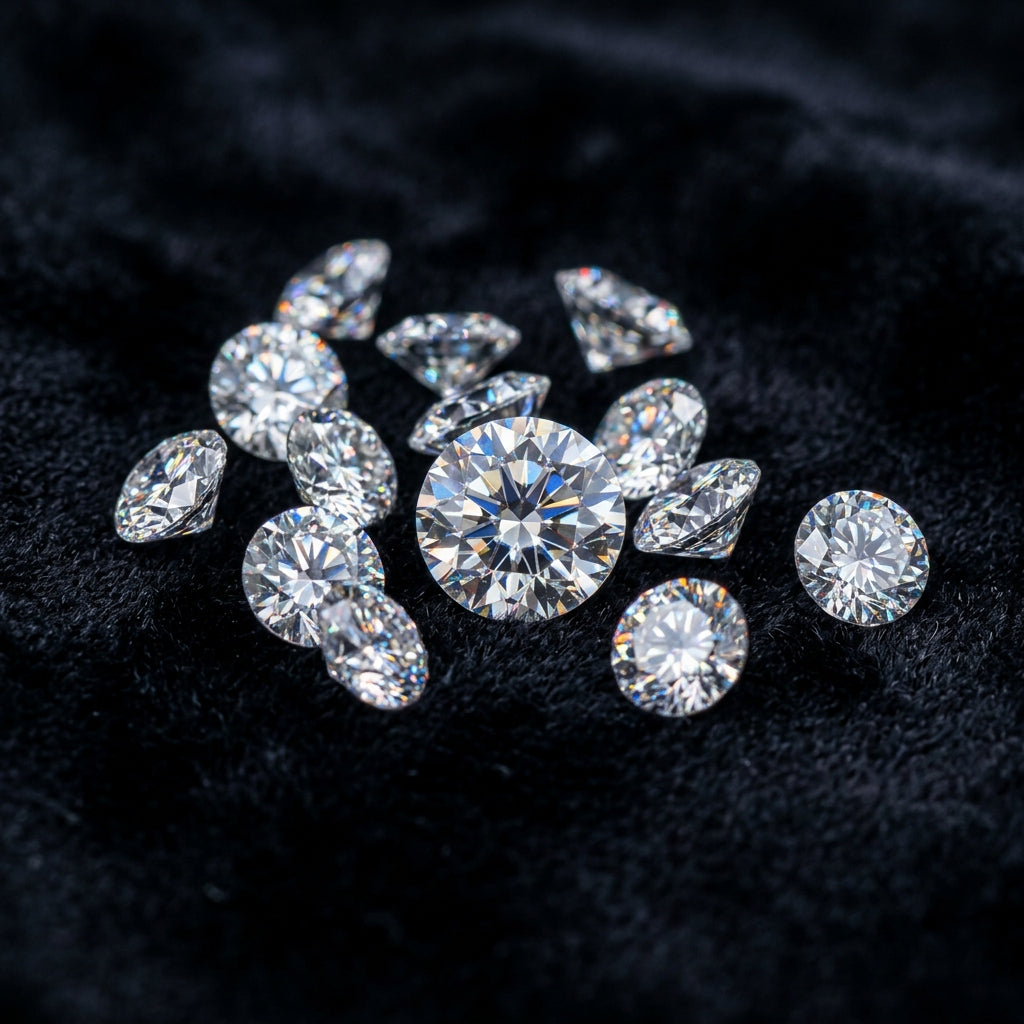


A diamond with exceptional clarity contains very few, if any, internal inclusions or surface imperfections. However, that doesn’t mean you need to focus only on flawless diamonds. Many stones with lower clarity grades can still appear eye-clean, offer impressive size, and deliver incredible brilliance. At Beluxe, we believe in maximizing sparkle, size, and value. Read on to discover more about diamond inclusions, blemishes, clarity ratings, and what they mean for your purchase.
What exactly is diamond clarity?
Diamond clarity measures the number, size, and visibility of imperfections found in a diamond. Internal imperfections, known as inclusions, form naturally when tiny particles such as gas, minerals, or dust become trapped inside the diamond during its creation. Surface imperfections, called blemishes, occur on the exterior of the stone.


Most diamonds naturally contain internal inclusions and external blemishes. These characteristics are evaluated using a clarity grading scale that ranges from FL (Flawless) to I1–I3 (Included). Diamonds with larger or more noticeable inclusions typically receive lower clarity grades. The location, size, and visibility of these imperfections play a significant role in determining both a diamond’s clarity rating and its overall value.
Shop the Look

The Olivia Sparkle
How does clarity affect cost?
Diamond clarity plays an important role in determining a diamond’s value and is often a key factor for shoppers. Generally, diamonds with fewer inclusions and blemishes are rarer and therefore command higher prices. Completely flawless diamonds are exceptionally uncommon, making them some of the most expensive stones available. For many buyers, finding the right balance between clarity and budget is the smartest approach.
One cost-effective option is to choose a lab-grown diamond. Like natural diamonds, lab-grown diamonds can contain inclusions, but high-clarity grades are typically much more accessible and affordable. This allows you to enjoy a beautiful, nearly flawless-looking diamond without paying the premium often associated with natural stones.
Diamond Clarity Grades

Internally flawless

Very very slightly included

Very slightly included

Slightly included
| Clarity Grade | Description |
|---|---|
| Flawless (FL) | No internal inclusions or surface blemishes visible under 10x magnification. |
| Internally Flawless (IF) | No inclusions can be seen under 10x magnification, though minor surface blemishes may be present. |
| Very, Very Slightly Included (VVS1 & VVS2) | Tiny inclusions that are extremely difficult for a trained grader to detect under 10x magnification. |
| Very Slightly Included (VS1 & VS2) | Minor inclusions that range from difficult to moderately easy for a grader to identify under 10x magnification. |
| Slightly Included (SI1 & SI2) | Noticeable inclusions that can be observed using 10x magnification. |
| Included (I1, I2 & I3) | Prominent inclusions visible under 10x magnification that may impact the diamond’s brilliance and transparency. |
A diamond grading certificate provides valuable information about a diamond’s clarity, along with other key quality characteristics. In our diamond catalog, the clarity grade for each stone is clearly listed to help you compare your options. Terms such as VVS1, VS2, and SI2 are standard grading abbreviations recognized by jewelers worldwide, making it helpful to understand what these ratings mean when choosing the right diamond.
Eye-clean: the only clarity grade that matters
A diamond grading report provides detailed information about a diamond’s clarity, along with other important quality factors. In our diamond catalog, the clarity grade is clearly listed for every stone. Since abbreviations like VVS1, VS2, and SI1 are recognized and used by jewelers worldwide, understanding these grades can help you make a more informed decision when selecting a diamond.
Cut First, Clarity Later
If your cut is poor, it doesn’t matter how clean the diamond is. It’ll look lifeless. Allocate your budget mostly to cut and carat size. We recommend getting in touch with us for advice on specific diamonds; we might help you save money by using prongs to hide light defects.
 The Sophia Pear
Every diamond is unique, with its own distinct characteristics and inclusion pattern. That’s why it’s important to inspect a diamond carefully before making a purchase, using tools such as Beluxe jewel's 3D diamond preview. Inclusions positioned beneath the table (the top, flat surface of the diamond) are often more noticeable than those located elsewhere. Even a small inclusion in this prominent area can affect the overall appearance and beauty of the stone.
clusion
The great news is that you don’t have to break the bank to own a stunning diamond with excellent brilliance and clarity. The key is understanding the 4Cs—Cut, Clarity, Color, and Carat Weight—and finding the right balance between them. With a solid understanding of these factors, you’ll be better equipped to choose a beautiful diamond that offers both exceptional quality and value.


