


Everything You Need to Know About Diamond Color
What does color mean in a diamond?
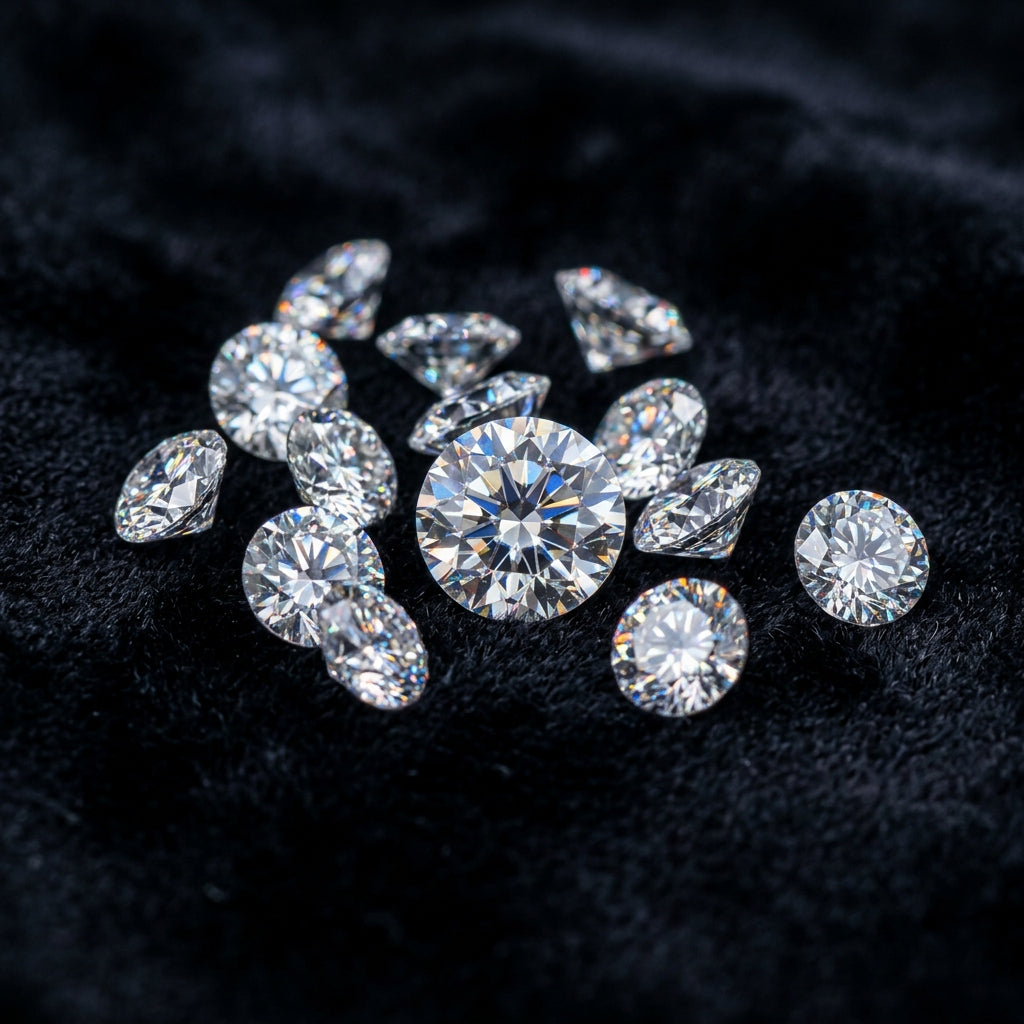
Diamond color exists on a spectrum that ranges from completely colorless to noticeably tinted shades of yellow or brown. The standard color grading scale begins with D, representing a perfectly colorless diamond, and continues through to Z, which indicates a visible yellow or brown tint. As you move down the scale, the presence of color becomes increasingly noticeable.

It’s clear to see; D to I is for me

Setting yourself up for success
Here’s how you can save money on color:
- Consider choosing a diamond in the F–H color range and pairing it with a rose gold or yellow gold setting, as these metal colors can help minimize the appearance of subtle warm tones.
- Opt for a brilliant-cut shape such as Round, Oval, or Marquise. These cuts maximize light performance and sparkle, making any slight color less noticeable.
- Prioritize cut quality when selecting a diamond. A beautifully cut stone reflects more light and exhibits greater brilliance, which can effectively disguise minor traces of color.
Diamond Color Scale
Colorless
Near Colorless
Faint Tint
Very Light
| Clarity grade | Meaning |
|---|---|
| Flawless (FL) | No inclusions or blemishes using 10x magnification |
| Internally flawless (IF) | No inclusions using 10x magnification |
| Very, very slightly included (VVS1 and VVS2) | Slight inclusions barely visible to a skilled diamond grader |
| Very slightly included (VS1 and VS2) | Small inclusions difficult to identify |
| Slightly included (SI1 and SI2) | Inclusions are visible with 10x magnification |
| Included (I1, I2 and I3) | Obvious inclusions that might affect brilliance |
What Diamond color should I choose?
For high-sparkle stones, H and above look colorless. I looks good in rose and yellow gold. We suggest AGAINST going with high-color grade diamonds (D-E) as it’s better to invest in cut and size.
Conclusion
Diamonds exist in a range of color hues. Color grades in the 'G', 'H', and 'I' range look great in the right diamond shape and setting material. You can preview all our stones in 3D, which makes it easy to pick the degree of tint that you prefer.


