


Everything You Need to Know About Round Cut Diamonds
Quick Summary
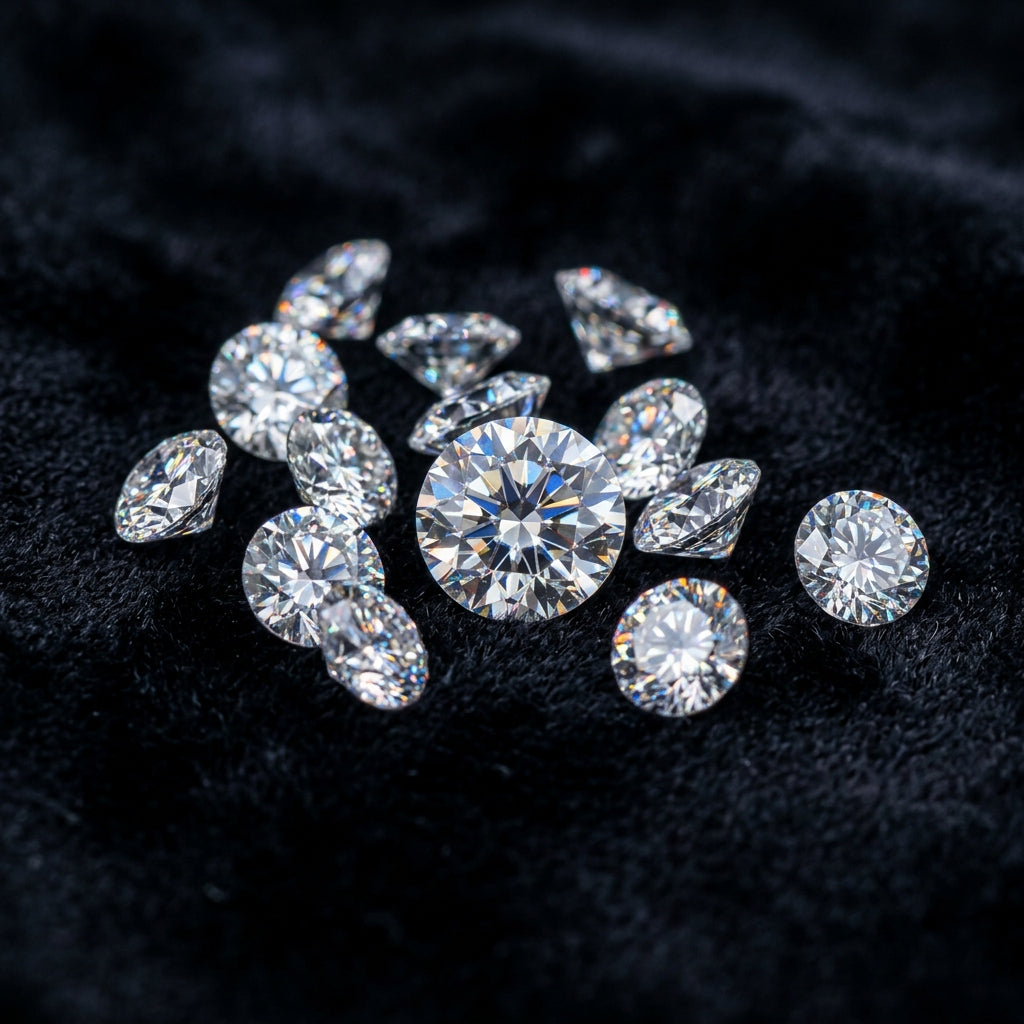
Round-cut diamonds have remained the most popular diamond shape for generations, admired for their exceptional symmetry, outstanding light performance, and classic elegance. Featuring 58 precisely arranged facets, the Round Brilliant Cut is designed to maximize brilliance, fire, and scintillation, creating a level of sparkle that few other shapes can achieve.
Because cut quality has such a significant impact on a diamond’s appearance and value, the round brilliant cut is often considered the benchmark for beauty and performance. When compared with shapes such as Oval, Cushion, Princess, or Emerald, round diamonds are widely recognized for delivering the most intense sparkle and a well-balanced, harmonious appearan

What Is a Round Cut Diamond?
The modern Round Brilliant diamond is a remarkable achievement in diamond cutting, engineered to maximize light performance. Featuring 58 facets, including the culet (or 57 if the culet is not faceted), it is carefully designed to capture, reflect, and disperse light with exceptional efficiency. Every facet and angle is precisely calculated to enhance brilliance, fire, and scintillation, making the Round Brilliant the most sparkling of all diamond shapes. Its versatility also allows it to complement a wide range of jewelry styles while consistently delivering outstanding visual appeal.
Before the development of the modern Round Brilliant, the Old European Cut was the dominant round diamond style. This vintage cut typically featured a higher crown, larger culet, and deeper proportions, producing a softer and warmer glow. While Old European diamonds remain highly valued for their antique character and romantic, candlelit sparkle, they do not offer the same level of brilliance and light return as modern round diamonds. For those seeking maximum sparkle, fire, and overall performance, the Round Brilliant Cut remains the gold standard in diamond cutting.
The Science Behind the SparkleRound Brilliant diamond is the product of precise craftsmanship and optical engineering. Each facet is positioned to capture, reflect, and disperse light with extraordinary accuracy. Its beauty comes from the perfect balance of three qualities: brilliance, fire, and scintillation.
Brilliance
Brilliance refers to the return of white light through the top of the diamond. A well-cut round brilliant is designed to reflect nearly all incoming light back to the eye, creating its unmistakable brightness and icy glow. Among all diamond shapes, the round cut is renowned for delivering the strongest overall brilliance.
Fire
Fire is the display of rainbow-colored flashes that appear as light passes through the diamond’s facets. In a properly proportioned round brilliant, these flashes of red, blue, green, and other spectral colors become vivid and lively, even in softer lighting. Fire adds warmth, depth, and a captivating sense of movement to the stone.
Scintillation
Scintillation is the dynamic sparkle you see when the diamond, the light source, or the viewer moves. The round brilliant’s symmetrical facet pattern creates a balanced, lively shimmer that gives the diamond its signature “alive” appearance. This interplay of light and motion is what makes round diamonds so mesmerizing in everyday wear.

How Cut Quality Impacts Beauty
A diamond’s cut shapes how light travels through the stone. A well-cut
diamond will always be stunning, even if the color or clarity grades are slightly lower.


Round Cut vs. Other Shapes
Romantic, pillow-like shape with a vintage feel, but a subtler glow than the round brilliant.
An elongated silhouette that flatters the finger, offering a slightly softer brilliance.
Bold and angular with a modern edge, though they lack the round cut's continuous symmetry.
Clean lines and a "hall-of-mirrors" effect, trading brilliance for clarity and understated elegance.

Natural or Lab-Grown?
When selecting a round-cut diamond, one of the most important choices is deciding between a natural and a lab-grown diamond. Both are genuine diamonds with the same chemical composition, crystal structure, and stunning visual appeal. The key difference is how they are formed. Natural diamonds develop deep within the Earth over billions of years, while lab-grown diamonds are created using advanced technology that replicates the natural diamond-growing process in a controlled environment.
Explore Beluxe's Round Cut Collection


