
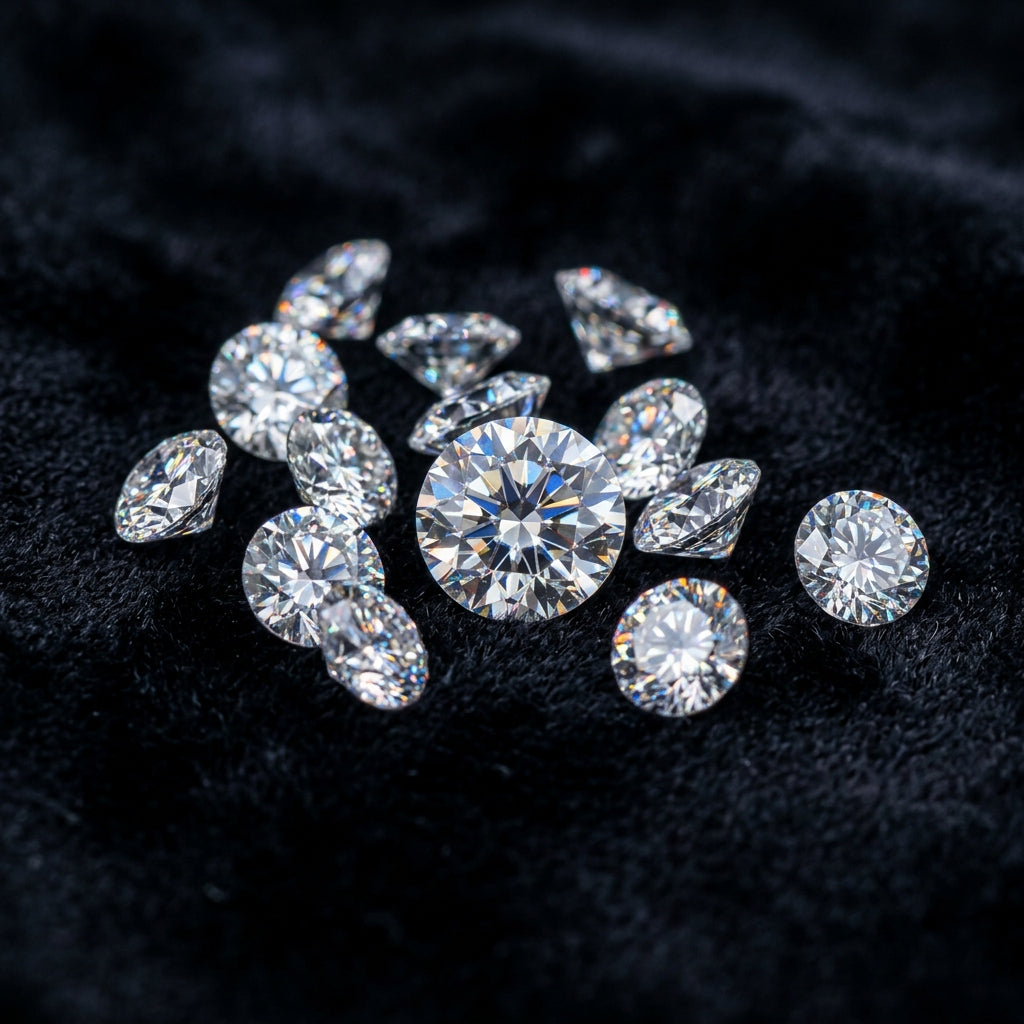


Everything You Need to Know About Diamond Sparkle
Ever wondered what gives diamonds their mesmerizing sparkle? In diamond science, sparkle is created by three key optical effects: brilliance, fire, and scintillation. Together, these characteristics determine how a diamond interacts with light and create the dazzling display that makes diamonds so captivating.

What Is Fire?
Fire refers to the colorful flashes of light that appear when white light passes through a diamond and is dispersed into the colors of the spectrum. Like a prism creating a rainbow, a diamond's facets separate light into vibrant flashes of red, blue, yellow, green, and other colors. The stronger the dispersion, the more noticeable the diamond's fire.
What Is Brilliance?
Brilliance is the bright white light reflected from a diamond. It results from both the internal and external reflection of light as it bounces between the diamond's facets before returning to the eye. Strong brilliance creates the intense white flashes that give diamonds their unmistakable sparkle and lively appearance.
What Is Scintillation?
Scintillation is the dynamic sparkle created as light reflects across a diamond's facets. It is most noticeable when the diamond, the light source, or the viewer is in motion, producing a captivating pattern of flashing light and dark areas.
Often described as the "life" of a diamond, scintillation creates the sparkling, twinkling effect that makes a diamond appear vibrant and full of energy. The quality and arrangement of a diamond's facets play a significant role in determining the intensity and pattern of its scintillation, adding depth and visual excitement to the stone's overall appearance.
Flash vs. Fire Scintillation

Flash Scintillation vs. Fire Scintillation
Flash scintillation refers to the bright white flashes of light visible across a diamond's crown. Diamonds with larger facets often display more prominent white-light flashes, creating bold and dramatic sparkle.
Fire scintillation refers to the colorful flashes produced when light disperses into the spectrum. Diamonds with many smaller facets tend to exhibit more fire scintillation, resulting in vibrant flashes of rainbow colors. Round brilliant diamonds are a classic example of a cut known for exceptional fire.
Slow vs. Fast Scintillation
Slow-moving scintillation occurs when flashes of light move gradually across larger facets. Step-cut diamonds, such as the Asscher cut, often display this elegant "hall-of-mirrors" effect, creating broad flashes that transition smoothly from facet to facet.
Fast-moving scintillation occurs when light rapidly jumps between numerous smaller facets. Brilliant-cut diamonds, including round and oval cuts, are known for this lively sparkle, producing quick bursts of light that create a highly energetic appearance.
The type of scintillation you prefer ultimately comes down to personal taste. Some people love the bold, dramatic flashes of larger facets, while others prefer the lively sparkle and colorful fire produced by brilliant-cut diamonds.
Getting More Sparkle with the 4 C’s

Cut: The Most Important Factor for Sparkle
The easiest way to maximize a diamond's sparkle is by understanding how the 4Cs influence light performance—starting with the most important factor: cut.
A well-cut diamond is designed to optimize brilliance, fire, and scintillation. In diamonds with Good, Very Good, or Excellent cut grades, the facets are precisely angled to reflect and refract light efficiently. The pavilion depth and facet arrangement work together to keep light inside the stone, allowing it to return through the crown as dazzling flashes of white and colored light.
In contrast, a poorly cut diamond allows light to escape through the sides or bottom of the stone. This reduces sparkle, making the diamond appear dull, lifeless, and less visually impressive.
The style of cut also plays a significant role. Generally, diamonds with more facets produce more sparkle because they create additional opportunities for light reflection. Brilliant-cut diamonds, such as round brilliant and radiant cuts, are specifically designed to maximize light performance and are renowned for their exceptional brilliance and scintillation.
Clarity
Clarity can have a noticeable impact on a diamond's sparkle. Diamonds with lower clarity grades may contain inclusions or blemishes that interfere with the way light travels through the stone, reducing its brilliance and overall visual performance.
In most cases, an eye-clean diamond—one with no visible inclusions to the naked eye—will display excellent sparkle when paired with a quality cut. Because cut has the greatest influence on light performance, even a diamond with minor inclusions can appear stunning if those inclusions are not visible and do not affect light reflection.
When selecting a diamond, aim for a balance between clarity and cut quality. An eye-clean diamond with a strong cut grade often provides the best combination of beauty and value, delivering maximum brilliance without paying a premium for imperfections that cannot be seen without magnification.
Note: Moissanite often reflects more colored light (fire) than diamonds, especially in "crushed ice" styles, whereas diamonds are valued for their perfect balance of all three types of sparkle.

Conclusion
Fire is one of the key elements that gives a diamond its captivating sparkle, but not all diamonds display the same level of brilliance and color dispersion. The intensity of a diamond's fire depends largely on its cut quality, proportions, and overall craftsmanship.
If you're looking for a diamond that truly dazzles, prioritize an excellent cut and eye-clean clarity. A well-cut diamond will maximize the reflection and dispersion of light, creating the perfect balance of brilliance, scintillation, and fire. By focusing on these qualities, you can choose a diamond that delivers exceptional sparkle and lasting beauty.


