
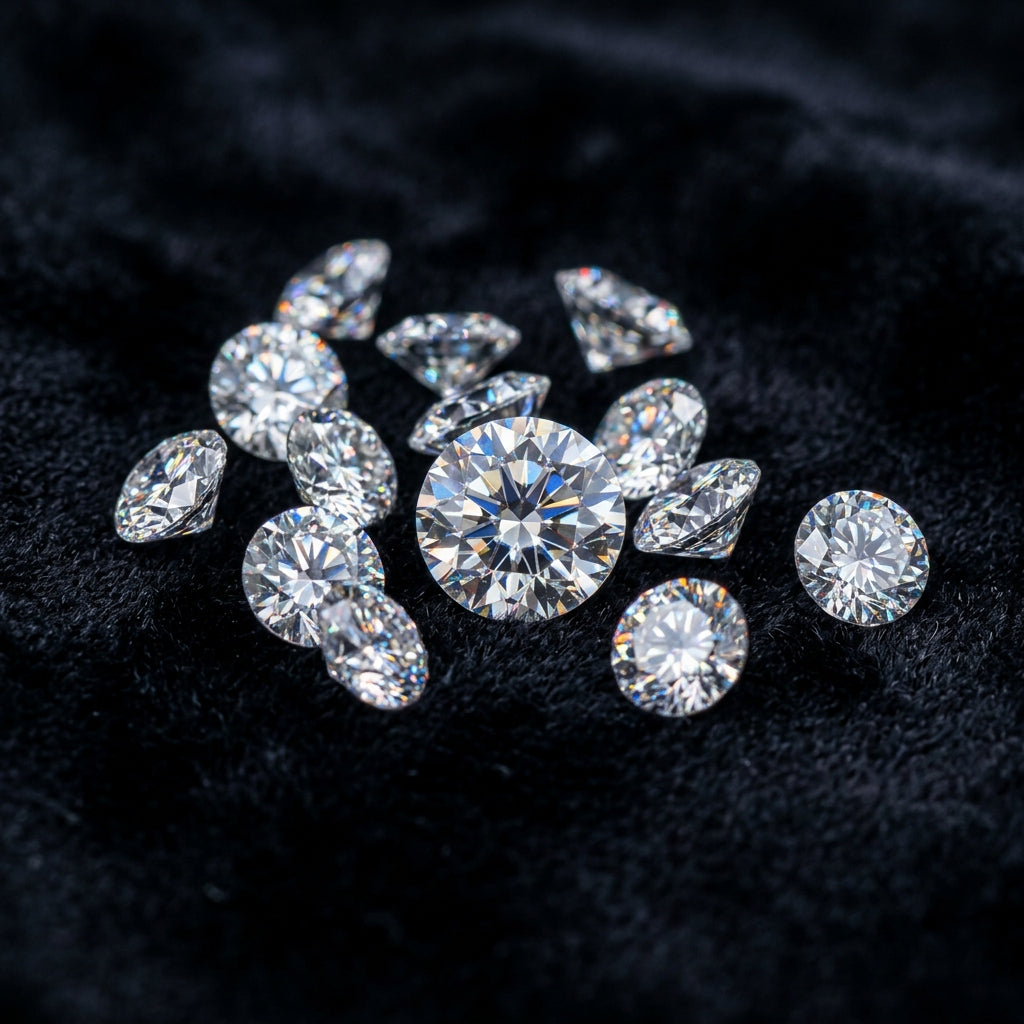


Everything You Need to Know About Diamond Anatomy
Same carbon, same crystal, same brilliance — grown in weeks rather than billions of years, and priced so you can choose the stone you actually want.
Although every diamond is unique, they all share the same basic anatomy. Each component plays an important role in determining a diamond's brilliance, sparkle, perceived size, and overall beauty. By understanding the key parts of a diamond, you can evaluate a stone beyond the traditional 4Cs and make a more informed purchasing decision.
In this guide, we'll explore the eight main components of a diamond's anatomy, explaining how each one contributes to light performance, appearance, and value. Whether you're shopping for an engagement ring or simply learning more about diamonds, understanding these features will help you identify a truly exceptional stone.

| Diamond Component | Description |
|---|---|
| Table | The largest facet located on the top of the diamond. Its size is measured as a percentage of the total girdle diameter. |
| Crown | The upper portion of the diamond surrounding the table. Includes the crown height and crown angle. |
| Girdle | The widest part of the diamond, separating the crown from the pavilion. Also known as the setting edge. |
| Diameter | The total width of the diamond measured at its widest point, often referred to as the girdle diameter. |
| Pavilion | The lower portion of the diamond extending from the girdle to the culet. Includes pavilion depth and pavilion angle. |
| Lower Girdle (Half Facet) Length | The length of the lower girdle facets relative to the pavilion length. |
| Culet | A small facet or point located at the bottom of the diamond. |
| Total Depth | The distance from the table to the culet, expressed as a percentage of the diamond's diameter. |
 Conclusion
A diamond's cut is one of the most important factors in determining its beauty and brilliance. From the table and crown to the pavilion and culet, every element of a diamond's anatomy works together to influence how light interacts with the stone and creates its signature sparkle.
By understanding these key components, you can look beyond the traditional 4Cs and make a more informed decision when selecting a diamond. Whether you're choosing an engagement ring or a special piece of jewelry, knowledge of diamond anatomy will help you find a stone that delivers exceptional fire, brilliance, and lasting beauty


