
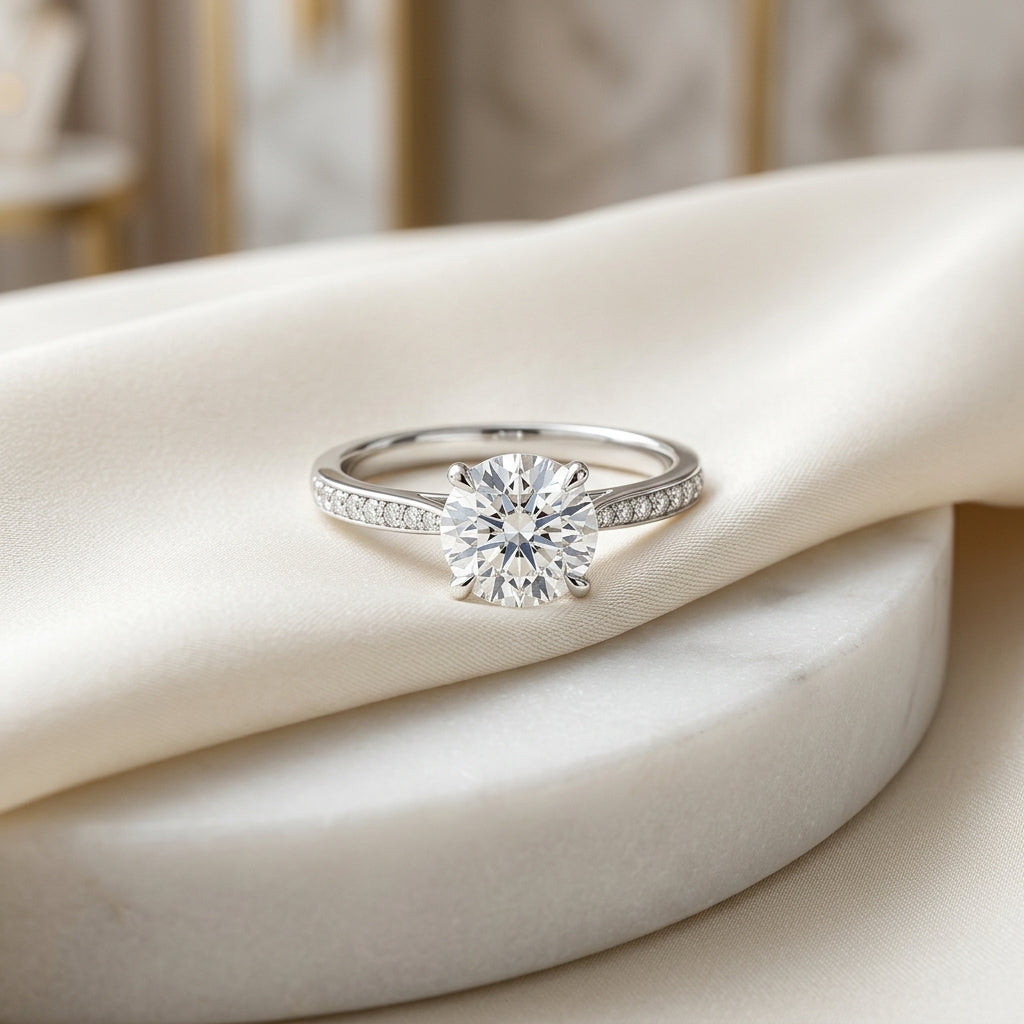


Everything You Need to Know About Solitaire Style Rings
When most people picture an engagement ring, they imagine a solitaire. Featuring a single center gemstone set on a simple band, the solitaire design has become an enduring symbol of love, commitment, and elegance.
Its clean, minimalist style allows the center stone to take center stage, showcasing its beauty and brilliance without distraction. Timeless and versatile, a solitaire engagement ring complements every personal style and remains one of the most popular choices for couples seeking a classic ring that will never go out of fashion.

What is a solitaire ring?
A solitaire ring features a single center gemstone set on a band, allowing the stone to be the focal point of the design. This simple yet elegant style highlights the gemstone's brilliance and beauty without additional accent stones.
Although solitaire settings are also popular for necklaces and earrings, they are most commonly associated with engagement rings. Their timeless design, versatility, and classic appeal have made solitaire rings one of the most enduring and sought-after engagement ring styles.

History of the Solitaire
The solitaire ring has a rich history dating back to Ancient Rome, where gold rings featuring a single uncut diamond were treasured as symbols of wealth, love, and commitment.
The tradition of diamond engagement rings gained widespread recognition in 1477, when Archduke Maximilian I of Austria presented a diamond engagement ring to Mary of Burgundy during his marriage proposal. This historic gesture inspired European nobility and helped establish the diamond engagement ring as a lasting symbol of love and devotion—a tradition that continues around the world today.
How to choose the perfect Solitaire

In a solitaire engagement ring, the center diamond is the star of the design, making its quality especially important. Of the 4Cs, cut has the greatest impact on a diamond's beauty, influencing its brilliance, sparkle, symmetry, and overall appearance.
The ideal carat weight is a matter of personal preference. Step-cut diamonds, such as Emerald and Asscher cuts, often look most impressive in larger sizes, as their broad, open facets highlight the stone's clarity and elegance. As carat weight increases, selecting a higher color and clarity grade becomes more important, since larger diamonds tend to reveal inclusions and color more easily.
By choosing a well-cut, well-proportioned diamond with the right balance of size, color, and clarity, you'll create a solitaire engagement ring that is timeless, radiant, and designed to be cherished for generations
Cut is King
In a solitaire, there are no side stones to hide a dull diamond. Prioritize a high cut grade to ensure maximum sparkle and symmetry.
Color & Clarity
The larger the diamond, the more visible inclusions become. Aim for an eye-clean stone to keep the "star of the show" looking flawless.

Which cuts look best?
While any shape works, Round Brilliant diamonds are the most timeless. For a more understated and classic look, Emerald or Asscher cuts offer a sophisticated, vintage-inspired elegance that looks stunning in a solitaire setting.
Which settings to choose?
Settings like The Alice or The Twig offer a unique twist on the classic solitaire, while the Solitaire Penelope adds tiny, tasteful hidden side stones for a touch of extra hidden sparkle.
Expert Tip: Since the setting is simple, you can often invest more of your budget into a larger, higher-quality center stone!

Conclusion
Solitaire diamond rings show your absolute devotion with one beautiful diamond. This symbol of love remains the most popular and timeless choice for couples around the world.


