
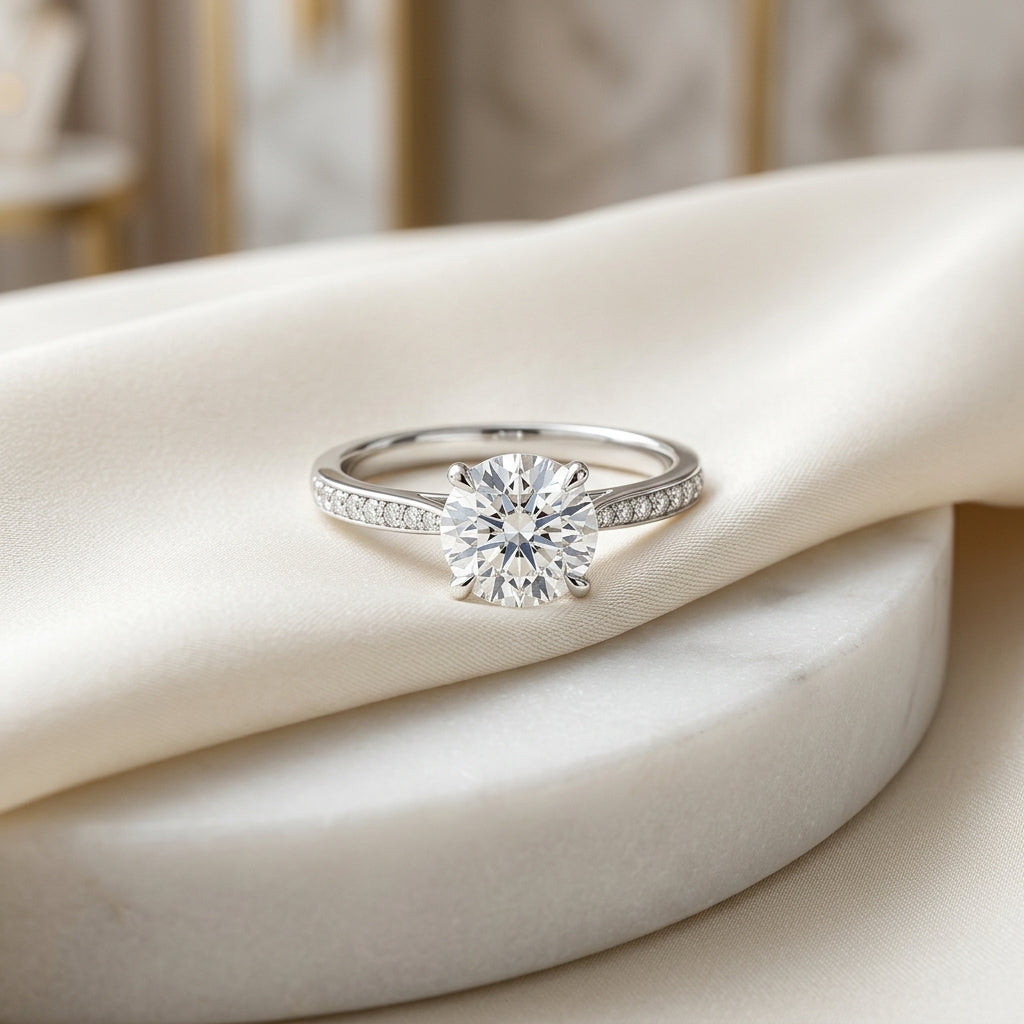


Everything You Need to Know About White Gold Engagement Rings
Elegant, versatile, and timeless, white gold is one of the most popular choices for engagement rings. Its bright, silvery-white finish complements every diamond shape, pairs effortlessly with any wardrobe, and flatters virtually every skin tone. It's no surprise that white gold remains the preferred metal for countless couples.
Whether you're considering 14K or 18K white gold, understanding the differences between these two alloys can help you choose the option that best suits your lifestyle, budget, and personal style. From durability and color to maintenance and long-term value, each offers its own unique advantages.
In this guide, we'll cover everything you need to know about white gold engagement rings, including how white gold is made, the differences between 14K and 18K, how to care for your ring, and why this classic precious metal continues to be a favorite for engagement rings.

Understanding 14K vs. 18K White Gold
When discussing gold, the karat (K) indicates the metal's purity. 24K gold is approximately 99.9% pure, but despite its high purity, it is too soft for everyday jewelry. Pure gold scratches, bends, and dents easily, making it impractical for engagement rings that are meant to be worn daily.
To improve its strength and durability, gold is alloyed with other metals. This is why 14K and 18K white gold are the most popular choices for fine jewelry.
- 14K White Gold contains 58.5% pure gold and 41.5% alloy metals, making it exceptionally durable and well-suited for everyday wear.
- 18K White Gold contains 75% pure gold and 25% alloy metals, offering a richer gold content while maintaining excellent durability and a luxurious feel.
Although the gold content differs, the visual difference between 14K and 18K white gold is virtually impossible to detect with the naked eye. Both are typically finished with a layer of rhodium plating, giving them the same bright, brilliant white appearance. The choice between the two ultimately comes down to your preference for purity, durability, and budget rather than visible color.
Why 14K and 18K White Gold Look the Same
Although 14K and 18K white gold contain different amounts of pure gold, they have virtually the same appearance. That's because all white gold engagement rings are finished with a layer of rhodium plating.
Rhodium is a rare precious metal that gives white gold its bright, reflective white finish while also improving its durability. This protective coating helps resist scratches, reduces tarnishing, and enhances the ring's overall brilliance. In other words, when you look at a white gold ring, you're actually seeing the rhodium finish, not the white gold alloy beneath it.
Beneath the rhodium plating:
- 14K white gold contains more alloy metals, making it slightly whiter in its natural state and more durable for everyday wear.
- 18K white gold contains more pure gold, giving it a warmer, slightly creamier tone beneath the plating and a softer feel.
However, because both alloys receive the same rhodium finish, there is no noticeable visual difference between 14K and 18K white gold. Your choice is therefore based on factors such as durability, gold purity, and personal preference—not appearance.
14K vs. 18K White Gold: What's the Difference?
Both 14K and 18K white gold are excellent choices for engagement rings, offering the same bright, rhodium-plated appearance. The main differences lie in their gold content, durability, and price.
| Feature | 14K White Gold | 18K White Gold |
|---|---|---|
| Gold Content | 58.5% pure gold | 75% pure gold |
| Durability | More durable and resistant to scratches | Slightly softer due to higher gold content |
| Color (Without Rhodium) | Naturally a little whiter | Slightly warmer, creamier tone |
| Appearance (With Rhodium) | Bright white | Bright white |
| Best For | Everyday wear and active lifestyles | Those who prefer higher gold purity and a more luxurious composition |
| Price | More affordable | Typically more expensive |
Which One Should You Choose?
Choose 14K white gold if you:
- Want maximum durability for everyday wear.
- Have an active lifestyle.
- Prefer excellent value without compromising appearance.
Choose 18K white gold if you:
- Prefer a higher percentage of pure gold.
- Appreciate the prestige of a higher-karat alloy.
- Don't mind slightly softer metal in exchange for greater gold content.
Since both alloys are finished with rhodium plating, they look virtually identical. Your decision should come down to the balance of durability, purity, and budget that best suits your lifestyle.
14K vs. 18K White Gold
While 14K and 18K white gold look virtually identical once rhodium plated, they differ in purity, durability, and price.
| 14K White Gold | 18K White Gold |
|---|---|
| 58.5% pure gold with a naturally cleaner white tone beneath the rhodium plating. | 75% pure gold with a naturally richer, warmer tone beneath the rhodium plating. |
| More affordable, making it an excellent value for everyday jewelry. | More expensive due to its higher gold content. |
| Slightly more resistant to everyday nicks and scratches, making it ideal for active lifestyles. | Highly resistant to tarnishing and oxidation, with a luxurious composition, though slightly softer than 14K. |
Which Is Right for You?
- Choose 14K white gold if you prioritize durability, affordability, and a ring that can easily withstand daily wear.
- Choose 18K white gold if you prefer higher gold purity and don't mind paying more for a richer precious metal content.
Since both alloys are coated with rhodium plating, they share the same bright white finish and elegant appearance. The choice ultimately comes down to your preference for durability, purity, and budget, rather than differences in color.
White Gold Care and Maintenance
Thanks to its rhodium plating, white gold requires a little more maintenance than yellow gold or rose gold. However, this extra care comes with significant benefits.
The rhodium coating forms a durable protective layer over the white gold, helping to resist scratches, reduce everyday wear, and maintain the ring's bright, reflective finish. It also enhances the metal's brilliance, giving white gold its signature crisp, silvery-white appearance.
Over time, this protective layer naturally wears down with daily use and may need to be replated to restore the ring's original shine. Fortunately, rhodium replating is a simple maintenance procedure that keeps your engagement ring looking as beautiful as the day you first wore it.
With occasional replating and regular cleaning, a white gold engagement ring will continue to sparkle brilliantly for years to come.
How to Clean a White Gold Ring
Keeping your white gold engagement ring clean is simple and helps maintain its brilliant shine between professional cleanings.

At-Home Cleaning Steps
- Soak your ring in warm water mixed with a small amount of mild dish soap.
- Gently remove dirt and residue using a soft cloth or a soft-bristled brush.
- Rinse thoroughly with lukewarm water.
- Pat the ring dry with a clean, lint-free cloth.
Cleaning Tips
White gold is protected by a rhodium-plated finish, so it's important to treat it gently.
- Avoid abrasive materials such as rough cloths, scouring pads, or stiff brushes.
- Do not use harsh chemicals or household cleaners, as they can wear away the rhodium plating and potentially loosen gemstones.
- For a deeper clean or to restore maximum brilliance, have your ring professionally cleaned by a jeweler.
Tip: Remove your white gold ring before swimming, cleaning, or handling harsh chemicals. Chlorine, bleach, and other strong chemicals can damage the rhodium plating and affect the longevity of your ring. Taking it off during these activities will help keep it looking beautiful for years to come.
Polishing and Rhodium Replating
White gold is a durable precious metal, and minor surface scratches can usually be polished away by a professional jeweler. However, because polishing removes a tiny amount of the outer layer, frequent polishing can gradually wear down the rhodium plating. For this reason, polishing should only be done when necessary.
Over time, the rhodium plating that gives white gold its bright, reflective finish will naturally wear away with everyday use. Most white gold rings benefit from professional rhodium replating every few years, depending on how often they are worn. Signs that it's time for replating include:
- A dull or less reflective appearance.
- Yellowish or warmer-toned areas beginning to show through the white finish.
- Uneven wear on the ring's surface.
A fresh rhodium coating restores the ring's original brilliance while renewing its protective finish, helping your white gold engagement ring look as beautiful as the day you first wore it.
With occasional professional polishing and replating, a white gold ring can maintain its timeless elegance and brilliant shine for a lifetime.
White Gold vs. Yellow Gold
Both white gold and yellow gold are beautiful choices for an engagement ring, but each offers its own unique advantages depending on your style, lifestyle, and maintenance preferences.
White Gold Yellow Gold More resistant to everyday nicks and scratches due to its alloy composition and protective rhodium plating. Softer than white gold but naturally durable for everyday wear. Bright, modern finish that complements virtually every diamond shape and ring style. Rich, classic golden hue that closely resembles the look of pure 24K gold. Flatters fair and rosy skin tones while looking beautiful on all skin tones. Particularly flattering on olive and darker skin tones, though it suits all complexions. Requires occasional rhodium replating to maintain its bright white appearance. Lower maintenance, as it does not require rhodium plating. Which Should You Choose?
- Choose white gold if you prefer a sleek, contemporary look, want enhanced scratch resistance, and don't mind occasional rhodium replating to maintain its brilliant white finish.
- Choose yellow gold if you love a timeless, traditional aesthetic and prefer a precious metal that requires less ongoing maintenance.
Both metals are excellent choices for an engagement ring—the best option ultimately comes down to your personal style, lifestyle, and maintenance preferences.
Lifetime White Gold Care
A quality white gold engagement ring is designed to last a lifetime, and with proper maintenance, it can retain its brilliant finish for years to come.
To help preserve its beauty, we offer complimentary lifetime polishing and rhodium replating on all white gold jewelry purchases. Whenever your ring begins to lose its bright white luster or shows signs of everyday wear, our professional care service will restore its original shine and finish.
With regular maintenance and expert care, your white gold engagement ring will continue to look as stunning as the day you first placed it on your partner's finger.

Conclusion
White gold remains one of the most popular choices for engagement rings—and for good reason. It combines timeless elegance with everyday durability, offering a bright, versatile finish that beautifully complements every diamond shape and personal style.
Whether you choose 14K white gold for its enhanced durability and value or 18K white gold for its higher gold content and luxurious composition, both provide the same brilliant, rhodium-plated appearance. With occasional professional cleaning and rhodium replating, a white gold engagement ring will continue to shine beautifully for years to come.
Stylish, durable, and effortlessly sophisticated, white gold is a classic precious metal that offers exceptional beauty and lasting value—making it an engagement ring choice you'll treasure for a lifetime.


