
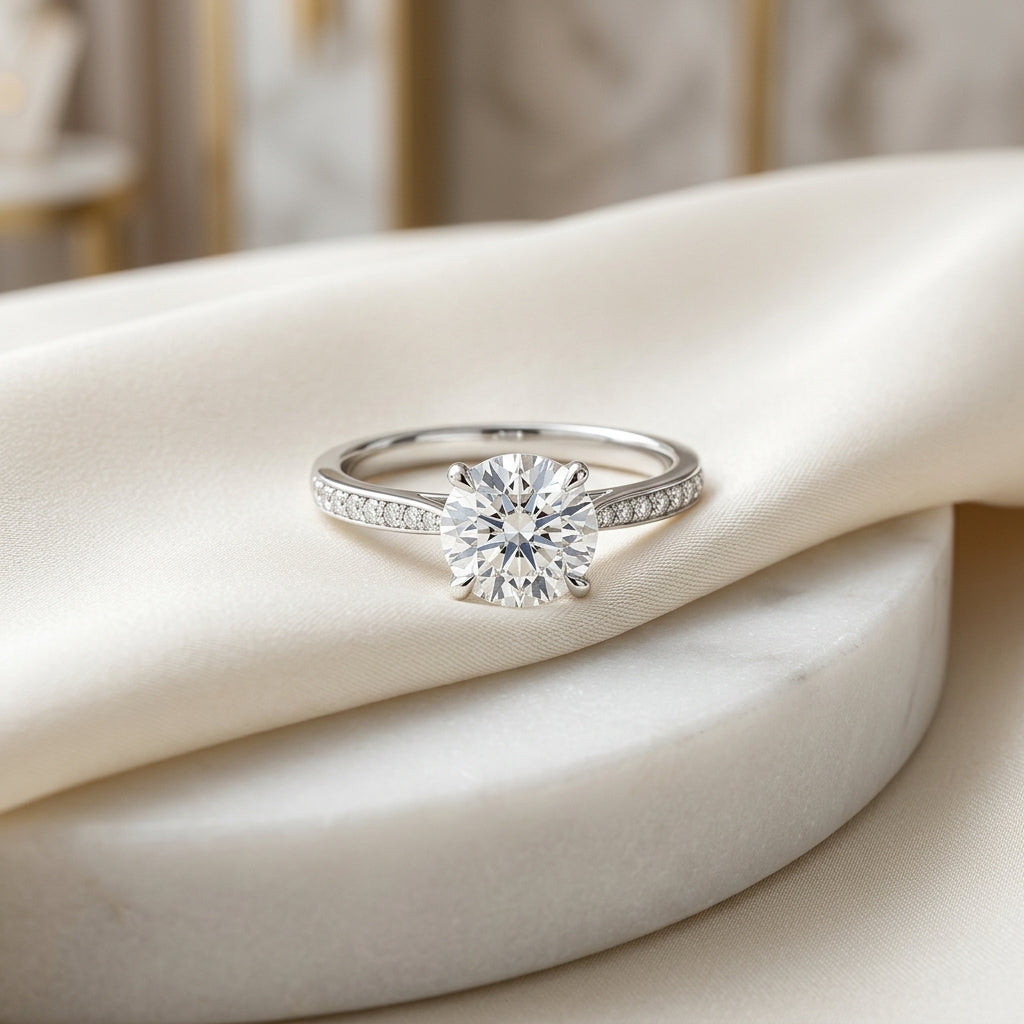


Everything You Need to Know About Pave Style Rings
A pavé engagement ring is designed to maximize sparkle by featuring small, closely set diamonds along the band. The word pavé, meaning "paved" in French, refers to the way these tiny diamonds are set closely together, creating the appearance of a continuous surface of shimmering stones.
This elegant setting enhances the brilliance of the ring while drawing attention to the center gemstone, making it appear even more radiant. Whether paired with a classic solitaire or a halo design, a pavé setting adds extra sparkle and sophistication, making it a popular choice for those who love a glamorous yet timeless engagement ring.
In this guide, we'll explore the key features of pavé settings, their unique benefits, and the different variations available to help you find the perfect engagement ring.

What is a Pavé setting?
A pavé engagement ring features one or more rows of small diamonds set closely together along the band, creating a continuous surface of sparkle. The term "pavé" comes from the French word for "paved," describing the way the diamonds appear to pave the ring with brilliance. Because the tiny diamonds are secured by small prongs or beads that are barely visible, the ring has a seamless, shimmering appearance.
Pavé diamonds can be incorporated into an engagement ring in several ways. They may line part or all of the band, surround the center gemstone to enhance its brilliance, or be used as decorative accents to create intricate, eye-catching designs. This versatility makes the pavé setting one of the most popular choices for adding extra sparkle and elegance.
History of the Pavé Setting
The pavé setting is rooted in traditional jewelry-making techniques that evolved over centuries. It gained widespread popularity during 18th-century England, where it became a defining feature of Georgian-era jewelry. Early jewelers carefully carved small openings into precious metals and fashioned tiny prongs or beads to securely hold each gemstone in place. This meticulous craftsmanship created the illusion of a continuous field of diamonds—a hallmark of the pavé style that continues to captivate jewelry lovers today.
History & Craftsmanship
While originating from ancient techniques, pavé first came to prominence in 18th-century Georgian jewelry. Today, it requires the steady hand of a master setter who may have to hand-place hundreds of miniature stones into one single ring.
Benefits of Pavé Engagement Rings
The closely set brilliant diamonds of a pavé engagement ring create a breathtaking display of sparkle while adding elegance and refinement to the design. Here are some of the key benefits of choosing a pavé setting:
Stunning Appearance
Pavé-set diamonds add intricate detail and exceptional brilliance to an engagement ring. By incorporating numerous small diamonds into the design, the ring reflects light from multiple angles, creating a dazzling sparkle. The pavé setting also enhances the beauty of the center stone, making it appear larger and even more radiant.
Versatile Design
Pavé diamonds complement a wide variety of engagement ring styles, from classic solitaires to halo and three-stone designs. They add extra brilliance without overshadowing the center gemstone and pair beautifully with plain, pavé, or eternity wedding bands, creating a cohesive and elegant bridal set.
Exceptional Craftsmanship
Crafting a pavé engagement ring requires remarkable precision and skill. Expert jewelers carefully set dozens—or even hundreds—of tiny diamonds by hand, ensuring each stone is securely positioned while maintaining the seamless appearance of the setting. This meticulous craftsmanship contributes to both the beauty and value of a pavé ring.
A Dazzling Display of Diamonds
Pavé engagement rings feature melee diamonds, also known as accent diamonds, which are small round brilliant-cut diamonds typically ranging from 0.001 to 0.20 carats. These tiny diamonds create a continuous ribbon of sparkle, while their size and arrangement help determine the overall width and appearance of the ring's band.
Types of Pavé Settings
pavé is a refined variation of the traditional pavé setting that uses extremely small prongs to secure tiny diamonds in place. Because the prongs are barely visible, more of each diamond remains exposed, creating the illusion of a continuous surface of sparkling gemstones.
This setting maximizes light exposure, enhancing the ring's brilliance and giving it an elegant, seamless appearance. The precision required to create a micro pavé ring demands exceptional craftsmanship, making it a popular choice for those seeking a sophisticated design with maximum sparkle.
Micropavé is a modern jewelry-setting technique that features uniformly sized diamonds, typically smaller than 0.01 carat, arranged in precise rows for a seamless, sparkling appearance.
Unlike traditional pavé, micropavé involves setting each tiny diamond into individually drilled holes in the metal, where they are secured with extremely fine beads or prongs. When multiple rows are placed together, they create a delicate honeycomb pattern that maximizes brilliance while minimizing the visibility of the metal.
This intricate technique requires exceptional craftsmanship and is prized for its refined, luxurious look, making micropavé a popular choice for engagement rings that offer continuous sparkle and elegant detail.
Fishtail pavé, also known as fishtail setting, is a distinctive variation of the traditional pavé style. In this technique, V-shaped grooves are carefully cut into the metal to secure each small diamond, creating a decorative pattern that resembles the tail of a fish.
This setting allows the diamonds to sit closely together while exposing more of their surface to light, resulting in exceptional brilliance. The intricate metalwork creates the illusion of a continuous, multi-faceted diamond, giving the ring a rich, elegant appearance with remarkable sparkle and vintage-inspired charm.

The Pros & Cons
More Sparkle
Pavé diamonds add exceptional brilliance to any engagement ring, creating a dazzling display of light and sparkle. The rows of tiny accent diamonds enhance the overall beauty of the ring, ensuring it catches the eye from every angle. This effect is especially striking in diamond band engagement rings, where the continuous sparkle makes a bold and elegant statement.
A Larger-Looking Center Stone
One of the greatest advantages of a pavé setting is its ability to make the center stone appear larger. The surrounding accent diamonds reflect light toward the center gemstone, enhancing its brilliance and creating the illusion of greater size without increasing its actual carat weight.
A Cost-Effective Way to Increase Carat Presence
A pavé setting is an excellent way to elevate the appearance of an engagement ring while keeping costs under control. By adding small accent diamonds to the band, the ring gains a higher total carat weight and a more luxurious look. This approach is often more cost-effective than purchasing a significantly larger center diamond, allowing you to achieve maximum sparkle and visual impact while staying within your budget.
Cons of the Pavé Ring

Things to Consider Before Choosing a Pavé Engagement Ring
While pavé engagement rings are admired for their exceptional sparkle, there are a few practical considerations to keep in mind before choosing this style.
Bold and Eye-Catching
Pavé settings are designed to maximize brilliance, making them ideal for those who love a glamorous look. If you prefer a more minimalist or understated style, a classic solitaire may be a better fit. Alternatively, a hidden halo or subtle pavé accents can provide extra sparkle while maintaining a refined appearance.
Potential for Snagging
The small prongs used to secure pavé diamonds can occasionally catch on delicate fabrics such as cashmere, wool, or silk. Choosing a well-crafted setting and handling your ring with care can help reduce the likelihood of snagging.
Resizing Can Be More Complex
Because pavé rings feature rows of small diamonds along the band, resizing requires extra precision. Adjusting the ring size may involve removing or resetting accent diamonds, making the process more time-consuming and potentially more expensive than resizing a plain band. To avoid future adjustments, it's recommended to have your finger professionally measured before purchasing your ring.
With proper care and routine maintenance, a pavé engagement ring will continue to deliver exceptional brilliance and timeless elegance for years to come.

Is it Fragile?
Because pavé engagement rings feature numerous small diamonds set individually, there is a slightly higher chance that an accent stone may loosen or become dislodged over time. Normal daily wear, accidental impacts, or gradual wear on the prongs can occasionally affect the security of these tiny diamonds.
This is a natural characteristic of pavé settings and does not indicate poor craftsmanship. With regular inspections and maintenance by a professional jeweler, the settings can be checked and tightened as needed to help prevent stone loss.
If an accent diamond does come loose, it is typically small and relatively affordable to replace, allowing your ring to be restored to its original beauty with minimal cost. Regular care will help ensure your pavé engagement ring continues to sparkle brilliantly for years to come.
Caring for a Pavé Engagement Ring
With proper care, a pavé engagement ring will retain its brilliance and beauty for years to come. Because the design features many small accent diamonds, it's important to handle the ring with a little extra care.
Avoid wearing your pavé ring during activities that could expose it to hard impacts or excessive pressure, as this may increase the risk of loosening or dislodging an accent stone. Clean the ring regularly using gentle methods or have it professionally cleaned to maintain its sparkle.
It's also recommended to have your pavé engagement ring inspected and serviced annually by a professional jeweler. Routine inspections help ensure the prongs and settings remain secure, allowing you to enjoy your ring's exceptional brilliance with confidence for a lifetime.

Conclusion
Pavé engagement rings are the perfect choice for those who want to maximize sparkle without taking attention away from the center stone. The rows of meticulously set accent diamonds enhance the ring's brilliance, creating a luxurious and eye-catching design.
Although pavé settings typically require more craftsmanship and may come at a higher cost than simpler styles, their exceptional beauty, intricate detailing, and timeless elegance make them a worthwhile investment. With proper care and maintenance, a pavé engagement ring will remain a dazzling symbol of love and commitment, treasured for a lifetime.


