
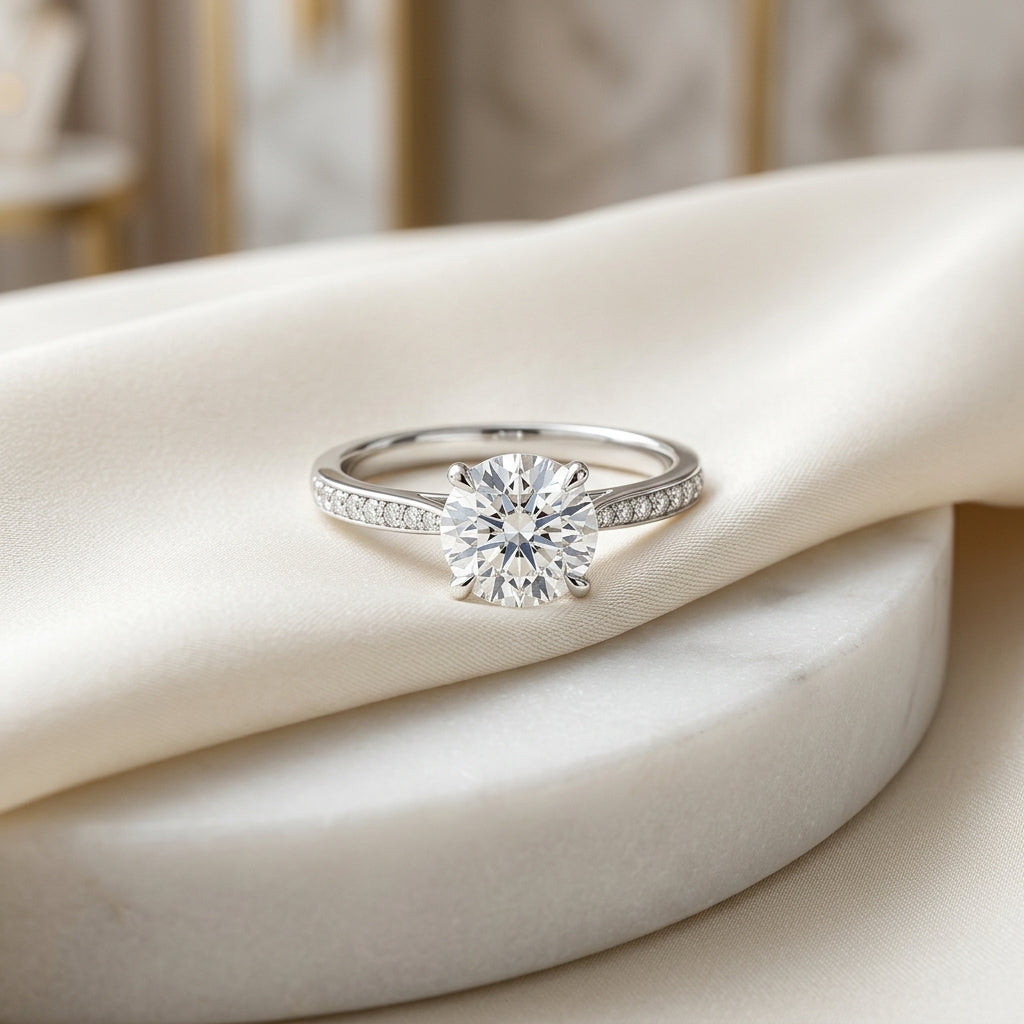


Everything You Need to Know About Yellow Gold Engagement Rings
Classic, warm, and timeless, yellow gold has been cherished for centuries as one of the most iconic precious metals for engagement rings. Its rich golden hue beautifully complements a wide range of diamond shapes and pairs especially well with vintage-inspired, classic, and modern designs. Beloved for its enduring appeal, yellow gold continues to be a favorite among couples seeking a ring with both elegance and tradition.
If you're considering a yellow gold engagement ring, it's important to understand the differences between 14K and 18K yellow gold, how gold purity affects durability, and why 24K pure gold isn't suitable for everyday jewelry. Choosing the right karat can help you find the perfect balance of beauty, strength, and value.
In this guide, we'll explain everything you need to know about yellow gold engagement rings, including gold purity, the benefits of 14K versus 18K, care and maintenance, and how a yellow gold setting can be a beautiful and cost-effective choice for your forever ring.

What is Yellow Gold?
Yellow gold is the natural color of pure gold, but the term "yellow gold" can refer to several different gold alloys. These alloys are classified by their karat (K), which indicates how much pure gold they contain.
The higher the karat, the greater the percentage of pure gold in the alloy.
- 24K yellow gold is 99.9% pure gold and has the richest, most vibrant golden color.
- However, because pure gold is extremely soft and malleable, it scratches, bends, and dents easily, making it unsuitable for everyday jewelry such as engagement rings.
- For this reason, jewelers create 14K and 18K yellow gold by blending pure gold with durable alloy metals. This improves the metal's strength while preserving its beautiful warm golden appearance.
Although 24K gold is prized for decorative pieces, investment bullion, and ceremonial jewelry, 14K and 18K yellow gold offer the ideal balance of beauty, durability, and practicality for engagement rings designed to be worn every day.
14K Yellow Gold Composition
14k vs. 18k Yellow Gold
While 24K gold is 99.9% pure, it is far too soft for everyday jewelry. To create durable engagement rings, pure gold is alloyed with other metals that improve its strength without compromising its signature golden beauty.
The highest purity commonly used for everyday engagement rings is 18K yellow gold. It contains 75% pure gold and 25% alloy metals, giving it a rich, warm golden color while offering excellent durability for daily wear.
14K yellow gold contains 58.5% pure gold and 41.5% alloy metals. Although it has a slightly lighter golden hue than 18K, it is noticeably stronger and more resistant to scratches and dents. This makes it an excellent choice for people with active lifestyles or hands-on professions, such as healthcare workers, craftspeople, and anyone who wears their ring every day.
In everyday wear, the visual difference between 14K and 18K yellow gold is subtle. While 18K has a deeper, richer color that more closely resembles pure gold, 14K offers superior durability and long-lasting performance. Your choice ultimately depends on whether you value higher gold purity or greater resistance to everyday wear.
| Feature | 14K Yellow Gold | 18K Yellow Gold |
|---|---|---|
| Purity | 58.5% Pure Gold | 75% Pure Gold |
| Popularity | The #1 choice for US engagement rings (90%). | A premium, classic "gold standard" choice. |
| Durability | Extremely durable; ideal for active lifestyles. | Warm and lustrous; slightly softer. |
| Hypoallergenic | Contains more alloyed metal. | Least likely to cause skin irritation. |

18k Vs. 14k Yellow Gold – What's the Right Choice?
There is no universally "better" choice between 14K and 18K yellow gold—the right option depends on your lifestyle, preferences, and priorities.
Higher Gold Purity
At 75% pure gold, 18K yellow gold contains significantly more gold than 14K, giving it a richer composition and a more luxurious feel. Its higher gold content is especially appealing to those who value purity and fine craftsmanship.
Rich, Warm Color
Because of its greater gold content, 18K yellow gold has a deeper, warmer golden hue that closely resembles the color of pure 24K gold. This rich luster gives engagement rings a refined, elegant appearance that never goes out of style.
Hypoallergenic
With fewer alloy metals, 18K yellow gold is less likely to cause skin irritation, making it an excellent choice for people with sensitive skin or metal allergies.
A Timeless, Classic Choice
For generations, 18K yellow gold has been regarded as the traditional standard for fine jewelry. Its rich color and enduring appeal make it especially popular in vintage-inspired and heirloom-style engagement rings, giving every piece a sense of timeless sophistication.
If you appreciate higher gold purity, luxurious color, and classic elegance, 18K yellow gold is an exceptional choice that beautifully combines tradition with lasting beauty.
Advantages to 14k Gold
-
14K yellow gold contains 58.5% pure gold and 41.5% alloy metals, making it stronger and more durable than 18K gold. Its enhanced strength makes it an excellent choice for engagement rings that are worn every day.
Exceptional Durability
Thanks to its higher alloy content, 14K yellow gold is more resistant to scratches, dents, and everyday wear. It's an ideal option for people with active lifestyles or hands-on professions, as well as anyone looking for a ring that will stand up to daily use.
Perfect for Intricate Designs
The added strength of 14K gold makes it well-suited for delicate prongs, fine detailing, and intricate ring settings. Whether it's a minimalist solitaire or an elaborate vintage-inspired design, 14K gold provides lasting structural integrity without sacrificing beauty.
Excellent Value
Because it contains less pure gold than 18K, 14K yellow gold is generally more affordable while still offering the warm, timeless appearance that makes yellow gold so popular. It provides an ideal balance of durability, elegance, and value.
14K vs. 18K Yellow Gold
14K Yellow Gold 18K Yellow Gold 58.5% pure gold 75% pure gold Most popular choice for engagement rings due to its durability and value. Richer, deeper golden color with higher gold purity. More resistant to scratches, dents, and everyday wear. Softer than 14K but offers a more luxurious composition. More affordable. Higher price due to its greater gold content. Excellent balance of durability and beauty. Ideal for those who prioritize purity and a richer gold color. Naturally durable for everyday wear. Less likely to tarnish because of its lower alloy content. Which Should You Choose?
- Choose 14K yellow gold if you want a durable, affordable engagement ring that can withstand everyday wear.
- Choose 18K yellow gold if you value higher gold purity, a richer golden hue, and a more luxurious composition.
Both alloys are timeless choices, offering classic beauty and lasting elegance. The best option depends on whether your priority is durability and value or gold purity and richness of color.
Does Yellow Gold Tarnish?
Yellow gold is naturally durable and well-suited for everyday wear, but a few simple habits can help preserve its beauty and keep it looking its best for years to come.
Remove Your Ring During Certain Activities
Take off your yellow gold jewelry when washing your hands, doing the dishes, cleaning, swimming, or using harsh chemicals. Although yellow gold is durable, prolonged exposure to soaps, chlorine, and cleaning products can dull its finish and increase everyday wear.
Store It Properly
When you're not wearing your ring, keep it in a soft-lined jewelry box or a separate jewelry pouch. Storing your ring separately helps prevent scratches caused by contact with other jewelry and protects its polished finish.
With regular care and proper storage, your yellow gold engagement ring will maintain its warm, radiant glow and timeless elegance for a lifetime.
Conclusion
Choosing between 14K and 18K yellow gold ultimately comes down to your personal style, lifestyle, and priorities. Both are beautiful, durable choices that have stood the test of time.
If you prefer a richer golden hue and higher gold purity, 18K yellow gold offers a luxurious, timeless look while remaining strong enough for everyday wear. If durability, value, and practicality are your top priorities, 14K yellow gold is an excellent option, providing enhanced resistance to everyday wear without sacrificing the classic beauty of yellow gold.
Whether you're drawn to the warmth of traditional gold or looking for a ring that can keep up with an active lifestyle, yellow gold is a timeless choice that suits virtually every style and personality. The best karat is simply the one that best reflects your preferences and the way you'll wear your ring for years to come.


