
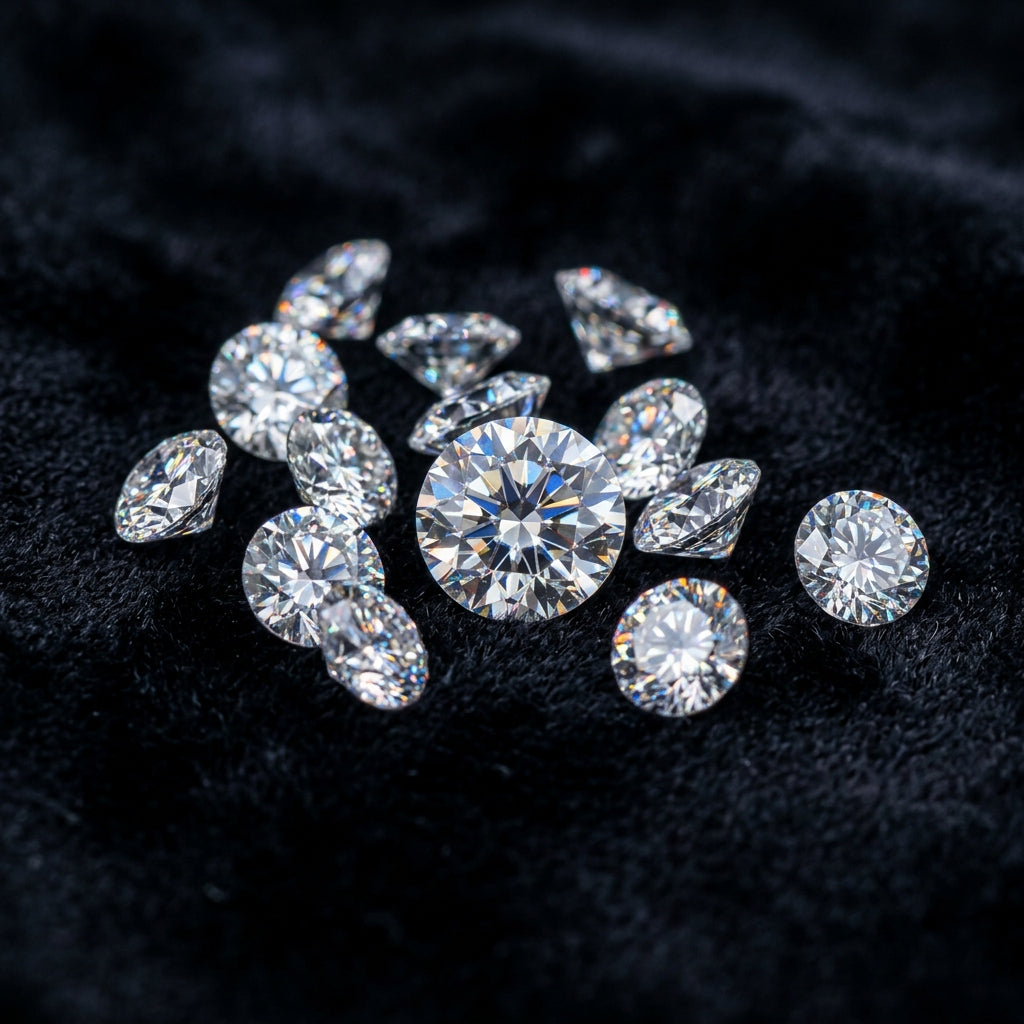


Everything You Need to Know About Natural Diamonds
Today’s diamond market offers more options than ever, including lab-grown diamonds, which are created using advanced technology in carefully controlled environments. Rather than forming naturally beneath the Earth’s surface over millions of years, these diamonds are grown in laboratories that replicate the conditions required for diamond formation.Lab-grown diamonds possess the same physical, chemical, and optical properties as natural diamonds, offering the same brilliance, durability, and beauty. They are also considered a more sustainable and environmentally conscious choice, often requiring fewer natural resources to produce. Combined with their competitive pricing, lab-grown diamonds make luxury more accessible, allowing buyers to maximize size and quality without compromising on appearance or performance.

Are Lab-Created Diamonds Real?
The short answer is yes—lab-grown diamonds are absolutely real diamonds.
There are two primary types of diamonds available today: lab-grown diamonds and natural (earth-mined) diamonds. While their origins differ, their composition does not. Lab-grown diamonds are made from the same carbon atoms and possess the same crystal structure as natural diamonds.
As a result, they share the same brilliance, sparkle, durability, and hardness as mined diamonds. Even trained gemologists typically require specialized equipment to distinguish between the two. Simply put, a lab-grown diamond is not a diamond simulant—it is a genuine diamond with the same physical, chemical, and optical properties as its natural counterpart.

The primary difference between lab-grown and natural diamonds lies in how they are formed. Natural diamonds develop deep within the Earth over billions of years under intense heat and pressure, while lab-grown diamonds are created in advanced laboratories using technology that replicates these natural conditions.
Despite their different origins, both types of diamonds are chemically, physically, and optically identical. Lab-grown diamonds offer the same brilliance, fire, and durability as mined diamonds, but are typically available at a lower price point. Their controlled production process also makes them an appealing option for those seeking a more sustainable and environmentally conscious choice without sacrificing quality or beauty
Lab-Grown vs. Natural Diamonds

Lab-grown and natural diamonds are virtually identical in appearance, brilliance, and durability. Both are made of pure carbon, share the same crystal structure, and possess the same physical, chemical, and optical properties. In fact, the difference cannot be seen with the naked eye.So, what sets them apart? The answer lies in their origin. Natural diamonds are formed deep within the Earth over billions of years, while lab-grown diamonds are created in advanced laboratories using technology that replicates the natural diamond-growing process. This difference in formation impacts factors such as rarity, price, and environmental footprint—but not the beauty or quality of the diamond itself.Let's take a closer look at how lab-grown and natural diamonds compare.OriginsLab-grown diamonds offer a level of transparency that many buyers value. Created in controlled laboratory environments over the course of a few weeks, they are produced through highly regulated processes that promote ethical sourcing and responsible manufacturing practices.Because they do not require large-scale mining, lab-grown diamonds generally have a lower environmental impact than their natural counterparts. They also provide greater traceability throughout the supply chain, giving buyers added confidence in the origin of their diamond.At our company, we are committed to sourcing only conflict-free diamonds. While all of our diamonds meet strict ethical standards, lab-grown diamonds offer an additional level of assurance through their controlled and transparent production process, making them an attractive choice for those seeking both beauty and peace of mind.

Price & Value
Lab-grown diamonds offer outstanding value, allowing you to maximize both size and quality without exceeding your budget. Because they are produced in controlled laboratory environments, supply is more consistent, helping to reduce the rarity-driven pricing often associated with natural diamonds.
As a result, lab-grown diamonds are typically 60–85% more affordable than natural diamonds of comparable size and quality. This means you can often choose a larger carat weight, higher clarity, or better color grade while spending significantly less.
While natural diamonds are sometimes associated with stronger resale value, this advantage is generally most relevant for rare, high-value stones. For most buyers, a diamond is primarily a symbol of love and commitment rather than an investment vehicle.
With lab-grown diamonds, you receive the same brilliance, sparkle, durability, and beauty as a natural diamond—at a fraction of the cost. The savings can give you the flexibility to select a more impressive diamond or invest in a more elaborate setting, helping you get the most from your budget without compromising on quality.

Let’s Get Technical
Diamonds are created in three primary ways: natural earth-mined, High Pressure High Temperature (HPHT), and Chemical Vapor Deposition (CVD). While their origins differ, all three methods produce real diamonds with the same fundamental properties.
Natural Earth-Mined Diamonds
Natural diamonds were formed billions of years ago deep beneath the Earth's surface, where intense heat and pressure caused carbon atoms to bond together in a crystalline structure. Over time, these diamonds remained buried within the Earth's mantle until volcanic activity carried them closer to the surface through eruptions that formed kimberlite and lamproite deposits.
The earliest known diamonds were discovered in the rivers and streams of India as early as the 4th century BC. Since then, diamonds have been treasured for their beauty, rarity, and durability, becoming some of the world's most sought-after gemstones.
Each natural diamond is the result of a remarkable geological journey spanning billions of years, making it a unique piece of Earth's history and one of nature's most extraordinary creations.

High Pressure-High Temperature (HPHT)
The High Pressure High Temperature (HPHT) method recreates the natural conditions under which diamonds form deep within the Earth. In this process, a small piece of diamond known as a diamond seed is placed inside a specialized chamber and exposed to extremely high temperatures and intense pressure.
Carbon is then introduced around the seed, where it gradually bonds and crystallizes layer by layer. Over time, the tiny seed grows into a fully formed diamond crystal with the same physical, chemical, and optical properties as a natural diamond.
By replicating nature’s diamond-growing environment in a controlled laboratory setting, the HPHT process produces genuine diamonds that offer the same brilliance, durability, and beauty as their earth-mined counterparts.
Chemical Vapor Deposition (CVD)
Chemical Vapor Deposition (CVD) is another advanced method used to create lab-grown diamonds. This process begins with a thin diamond seed placed inside a low-pressure vacuum chamber filled with a mixture of hydrogen and hydrocarbon gases, typically methane.
When energy is introduced into the chamber, the gases break down into their atomic components. The carbon atoms are then released and gradually bond to the diamond seed, crystallizing layer by layer to form a diamond. During this process, some of the hydrogen is converted into atomic hydrogen, which helps stabilize diamond growth and prevents unwanted forms of carbon from developing.
Over time, these carbon layers build upon one another, creating a high-quality diamond crystal with the same physical, chemical, and optical properties as a natural diamond. The result is a genuine diamond that delivers the same brilliance, durability, and beauty as an earth-mined stone.
Frequently Asked Questions
Do Lab Diamonds Get Cloudy?
Like natural diamonds, lab-grown diamonds typically depreciate after purchase and should not be viewed primarily as investment assets. However, because they generally cost 60–85% less upfront than comparable natural diamonds, they can offer exceptional value for buyers focused on beauty, quality, and personal significance rather than resale potential.
The resale market for lab-grown diamonds is still evolving, and their increasing availability helps keep prices accessible for consumers. For most people, a diamond represents a meaningful symbol of love and commitment rather than a financial investment.
Ultimately, lab-grown diamonds allow buyers to enjoy the same brilliance, durability, and visual appeal as natural diamonds—often at a significantly lower cost. If your priority is maximizing size, quality, and value rather than future resale, a lab-grown diamond can be an excellent choice.
Are They Ethical?
Lab-grown diamonds are often considered a more ethical and environmentally conscious alternative to mined diamonds. Because they are created in controlled laboratory environments, they avoid many of the concerns associated with traditional diamond mining, including land disruption and complex sourcing challenges.
Compared to mining, lab-grown diamond production generally requires significantly less land and water. While the manufacturing process does consume energy, many producers are increasingly adopting renewable energy sources and implementing more sustainable production methods to reduce their environmental impact.
For buyers who prioritize sustainability, it's worth seeking out brands that emphasize responsible sourcing, renewable energy use, and carbon-neutral initiatives. By choosing a lab-grown diamond from a company committed to these practices, you can enjoy the beauty and brilliance of a real diamond while supporting a more environmentally conscious approach to fine jewelry
Do Lab-Grown Diamonds Get Cloudy?
No, lab-grown diamonds do not become cloudy over time. Because they have the same chemical composition, crystal structure, and hardness as natural diamonds, they retain their brilliance and sparkle indefinitely.
Like any diamond, however, they can accumulate everyday substances such as oils, lotions, soap residue, and dirt, which may temporarily reduce their shine. Regular cleaning with a gentle jewelry cleaner or a solution of mild soap and warm water will help keep your diamond looking as brilliant as the day you received it.
What Are the Downsides of Lab-Grown Diamonds?
While lab-grown diamonds offer significant advantages in terms of affordability, sustainability, and ethical sourcing, there are a few factors to consider.
Lower Resale Value: Lab-grown diamonds generally have a lower resale value than natural diamonds due to increased production and wider market availability. As the industry continues to grow, prices may become even more competitive over time.
Perceived Rarity: Some buyers prefer natural diamonds because of their geological rarity and the unique story of their formation over billions of years.
Despite these considerations, lab-grown diamonds remain an excellent choice for many consumers. They offer the same beauty, brilliance, and durability as natural diamonds while providing exceptional value and a more environmentally conscious alternative. For those prioritizing size, quality, and ethical sourcing, lab-grown diamonds are a compelling option for engagement rings and fine jewelry.
Pro Tip
For most buyers, a diamond is a symbol of love and commitment—not an investment. Unless you're purchasing a rare, collector-grade diamond valued at $20,000 or more, resale value is often limited for both natural and lab-grown diamonds. That's why many shoppers choose a lab-grown diamond, allowing them to maximize their budget and enjoy a larger, higher-quality stone with exceptional brilliance and beauty from day one.

Conclusion
Lab-grown diamonds offer the same beauty, brilliance, and durability as natural diamonds at a more accessible price. Created in controlled environments without mining, they provide an ethical and sustainable alternative while allowing you to maximize size and quality within your budget. If you're looking for exceptional value without compromising on sparkle, a lab-grown diamond is an excellent choice.


