
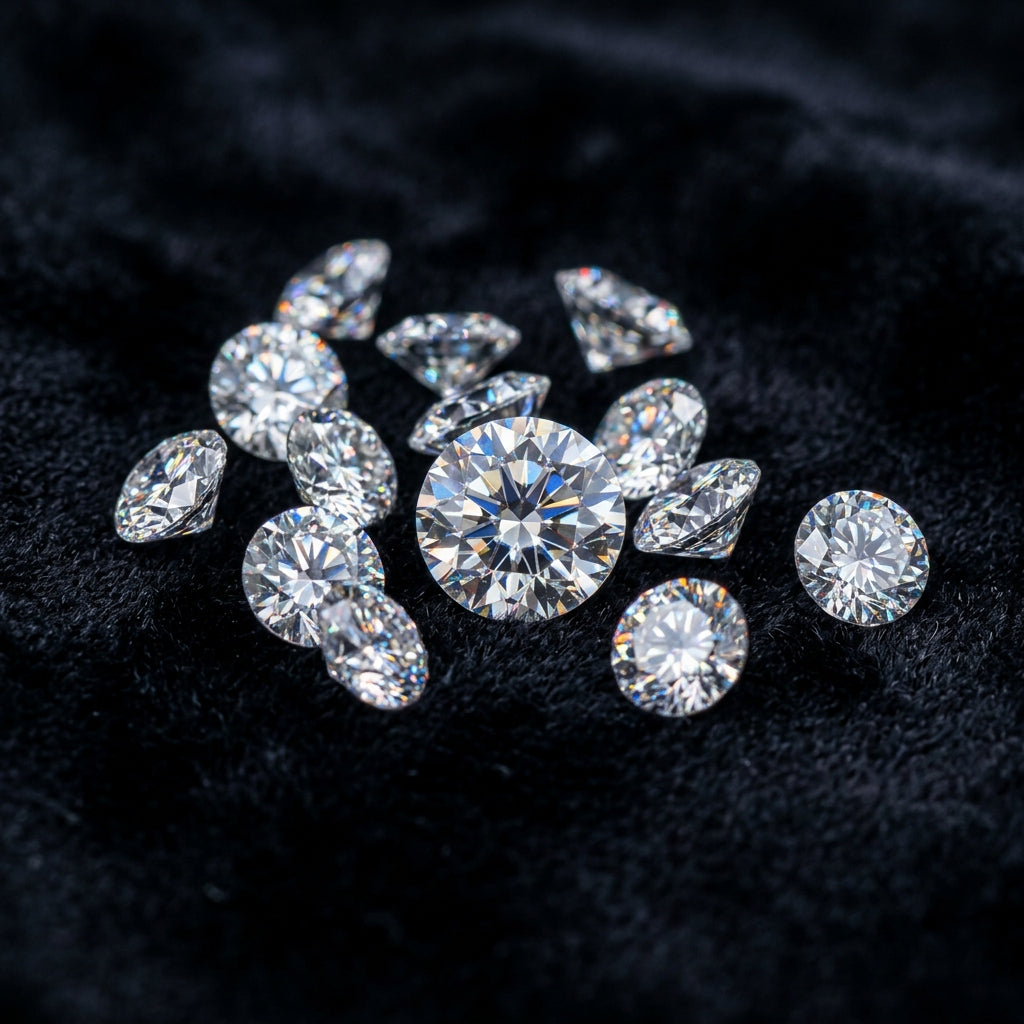


Everything You Need to Know About Carat Weight
Carat weight is the standard unit used throughout the jewelry industry to measure a diamond’s weight. While many people associate carats with a diamond’s size, carat weight actually refers to the stone’s mass, not its physical dimensions.
Having a good understanding of carat weight can help you choose a diamond that appears larger while staying within your budget. Without this knowledge, it’s easy to spend more than necessary on a diamond that may weigh more but doesn’t look noticeably bigger or more attractive. That’s why understanding how diamond weight influences appearance and value is such an important part of the buying process.
What is a Carat?
A carat is the standard unit of measurement used to determine the weight of a gemstone. Although the term may sound similar to “carrot,” the vegetable, in the jewelry world a carat specifically refers to how much a diamond or gemstone weighs.
In general, a diamond’s visual size is closely related to its carat weight. During the cutting and polishing process, rough diamonds can lose up to two-thirds of their original weight before becoming a finished gemstone. Because large, high-quality rough diamonds are much rarer than smaller ones, diamonds with higher carat weights are typically more valuable. As a result, carat weight serves as an important indicator of a diamond’s overall size and rarity.
Carat Weight in Different Gemstones

What Does 1 Carat Weigh?
A carat is a unit of weight equal to 0.2 grams (or approximately 0.007 ounces). This means that a diamond weighing 1 gram would have a carat weight of 5 carats—an impressively large diamond by most standards.
In the jewelry industry, diamonds are also measured in points. One carat is equivalent to 100 points, so a 0.50-carat diamond is often referred to as a 50-point diamond. This point system provides a convenient way to describe diamonds that weigh less than one carat.
A Brief History of the Carat System
The term “carat” has an interesting history. In ancient times, merchants used carob seeds as a reference weight when measuring gemstones because the seeds were believed to have a fairly consistent mass. The word carat is derived from the same origin as carob, reflecting this historical practice.
To create a standardized system for gemstone weighing, the metric carat was officially adopted as a universal unit of measurement in 1907. Since then, carat weight has become the globally accepted standard for measuring the weight of diamonds and other precious gemstones.
Does Carat Weight Impact Price?
he value of a gemstone is largely influenced by the 4 Cs. Here's a brief overview of these key factors:
The weight of the diamond
Proportions and brilliance
Absence of inclusions
The hue of the diamond
Why Some Carat Weights Cost More
Pro Tip
A 0.92-carat diamond can appear virtually the same size as a 1.00-carat diamond when viewed with the naked eye, yet it often comes with a significantly lower price tag. In many cases, choosing a diamond just below the 1-carat mark can save you 20–30% while delivering a nearly identical visual appearance. This makes it a popular choice for buyers seeking the best balance between size and value.
Conclusion
Carat weight is only one aspect of a diamond’s overall quality and value. If your goal is to maximize size and brilliance, paying close attention to the diamond’s cut and shape can be just as important as its weight. To get the most value for your budget, consider diamonds that fall just below popular full-carat milestones. With a better understanding of these factors, you'll be well-equipped to choose a diamond that perfectly matches your style, preferences, and budget.


